Overview
Summary
Health agencies around the world are taking steps to regulate
ultra-processed foods — a group of products implicated in diet-related
chronic diseases. To place limits on these products, legislators and
regulators (policymakers) must be able to identify them. Recent efforts
have focused on identifying ultra-processed foods by the presence
of cosmetic additives, but this approach perpetuates a longstanding
limitation of nutrition policies — manufacturers can simply reformulate
their products, introducing new additives with similar structures and
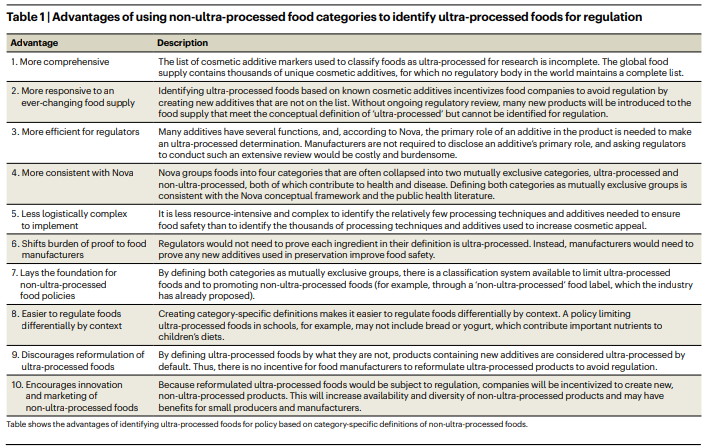
functions to avoid regulation. To address this problem, policymakers
should instead create a definition of non-ultra-processed foods. This is
an actionable approach that would improve regulatory efficiency, offer
flexibility to regulate ultra-processed foods differentially by context,
and better protect the public’s health.